Free
$0
- One language
- Logging and the timer
- A daily goal with a weekly recap
- Streaks, stats and the map
- All your history, with CSV export
Language learning tracker
Most people guess. LangTrack is a small web app for writing it down: what you did, in which language, for how many minutes. A few weeks in, the guess turns into a number.
Sign up with Google or email · No card · Free for one language
Evening
Mei 👋
12 days strong. You're past the hard part.
🎯Your goals
This week4h 12m
Learning a language is slow enough that you can't feel it happening. By March you have no idea whether January was ten hours or forty. Writing the minutes down fixes that, and it's most of what this app does.
| Day | Activity | Language | Minutes |
|---|---|---|---|
| Today | Vocabulary | Japanese | 14 min |
| Today | Reading | Chinese | 10 min |
| Today | Vocabulary | Chinese | 7 min |
| Yesterday | Watching | Japanese | 52 min |
| Yesterday | Watching | Chinese | 39 min |
| Yesterday | Listening | Japanese | 36 min |
| This week so far | 11h 18m | ||
There isn't much to it. That's on purpose.
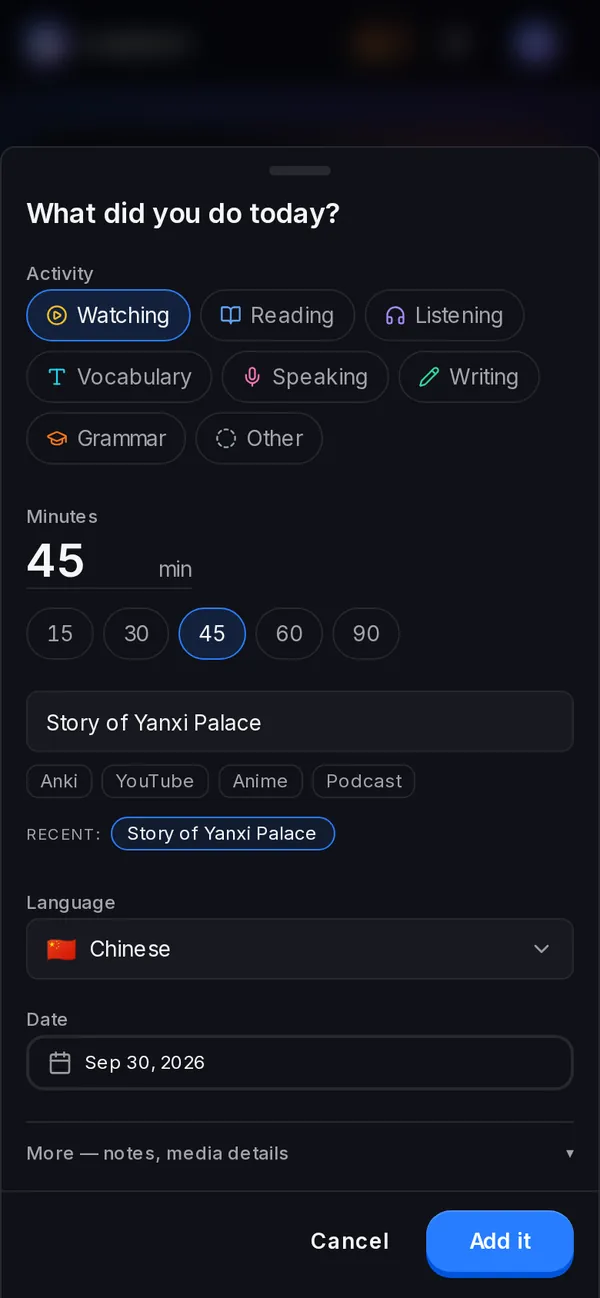
Pick the activity, the language and the minutes. Forty-five minutes of a Chinese drama takes a few seconds to enter, and doing the same thing as yesterday takes two taps. If you'd rather not do the maths, start the timer and stop it when the episode ends.
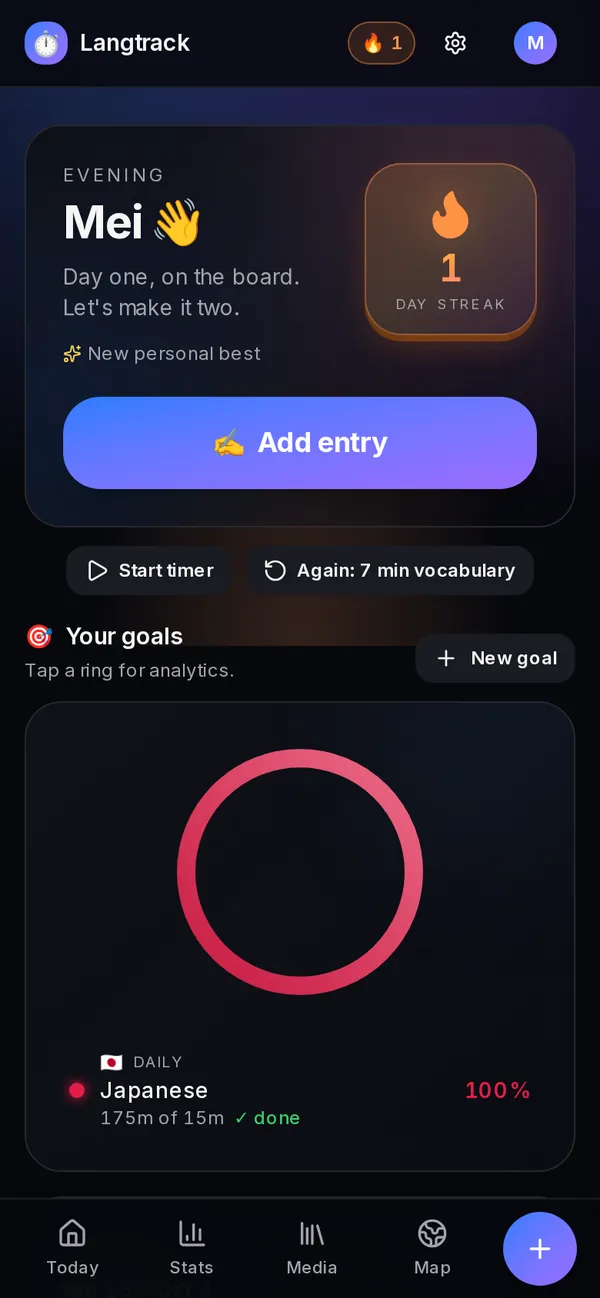
Give a language a target, say 15 minutes a day. The ring on the Today screen fills as you log. Some days it's full before breakfast. Some days you log five minutes at 11 pm to keep the streak. Both count.
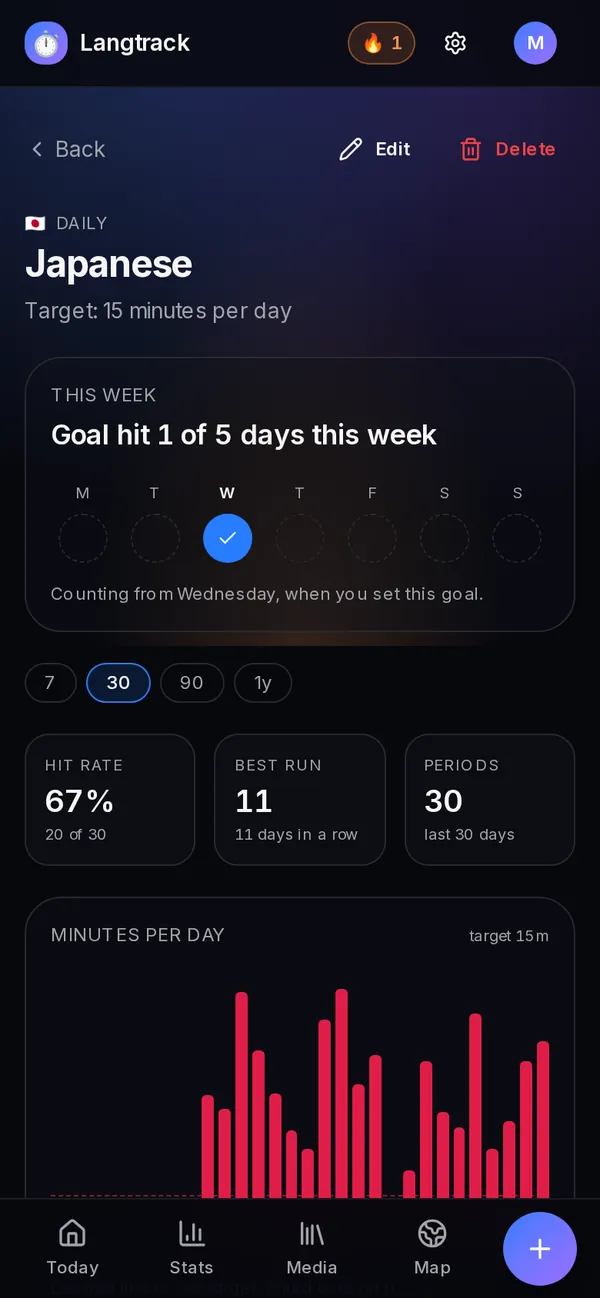
Each goal gets a weekly recap: how many days you hit it, your best run, minutes per day. It doesn't grade you. Hitting the goal 2 days out of 7 looks like exactly that, and next week starts clean.
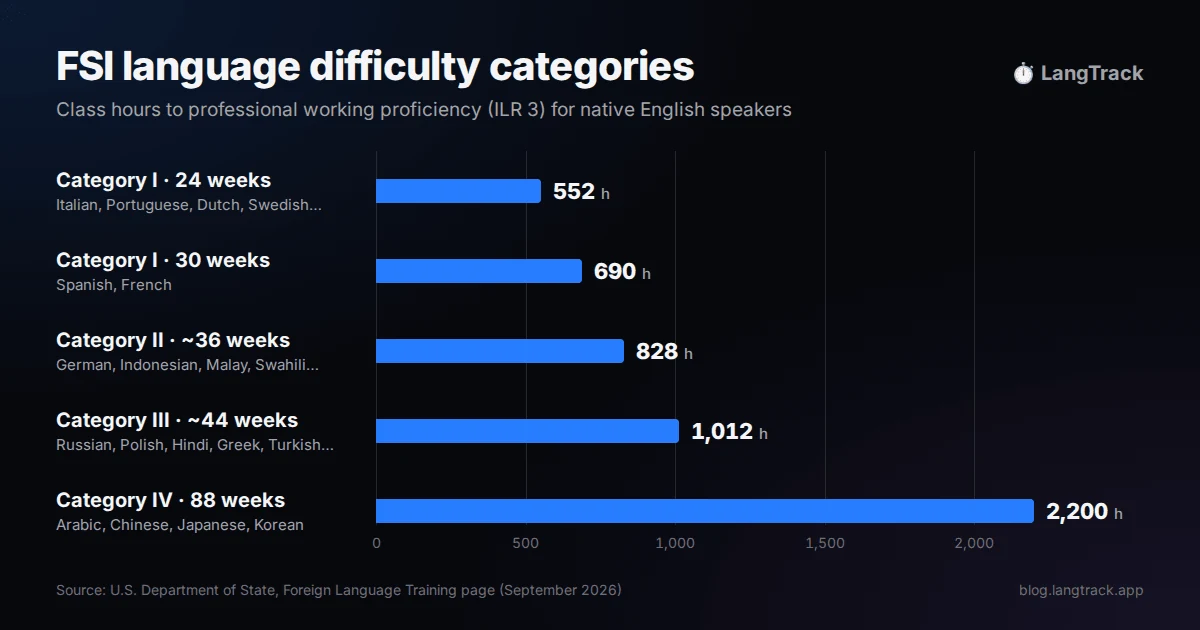
Set a level goal and LangTrack estimates the hours from FSI figures, then shows what's left and roughly when you'll get there.
It's a rough guide, adjusted for the languages you already speak. Your own logged hours soon tell you more.
Spanish B2
412 hours left
Enter the hours you put in before LangTrack as one starting total per language. The count starts where you actually are.
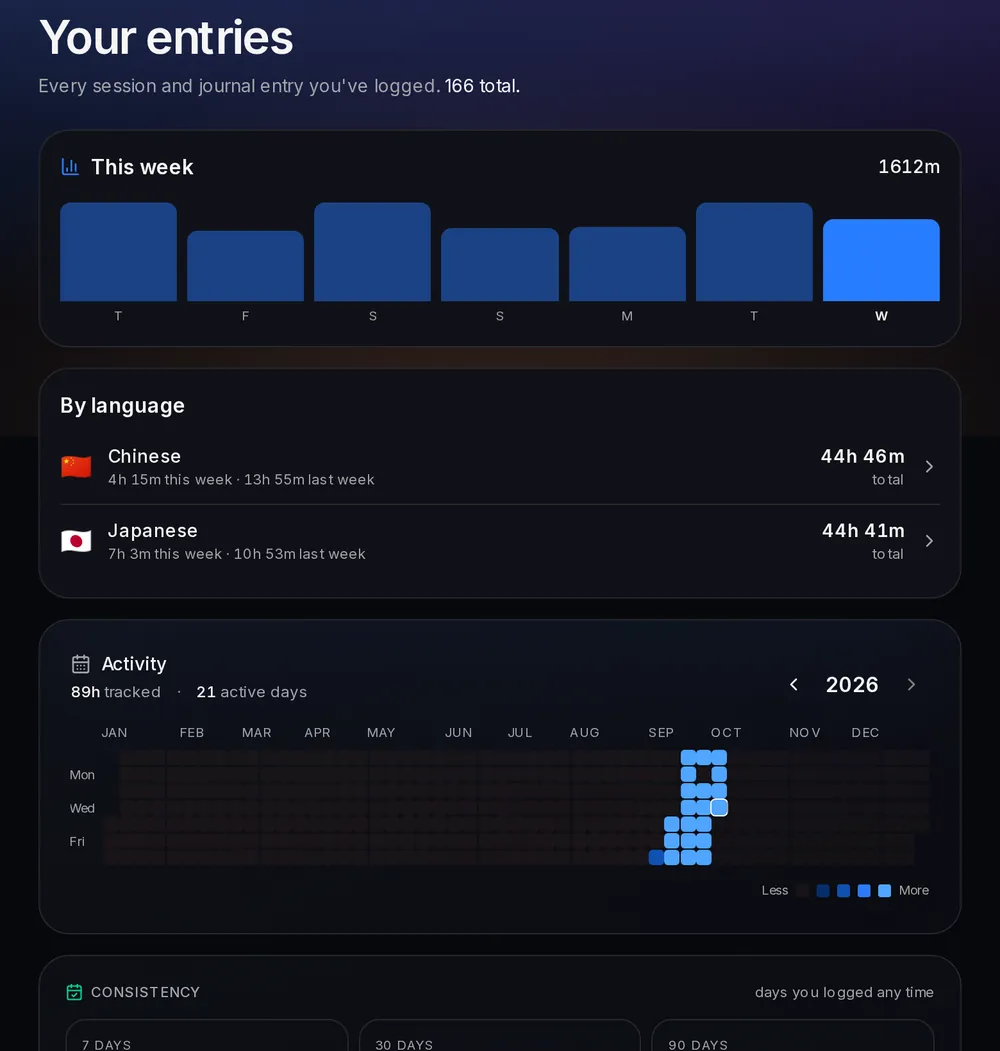
The Stats page splits your time by language, puts this week next to last week, and lays the year out as a grid of days. The account in the screenshot has almost exactly as much Chinese as Japanese, so it would be obvious if one of them started to slip.
89h logged on that account so far
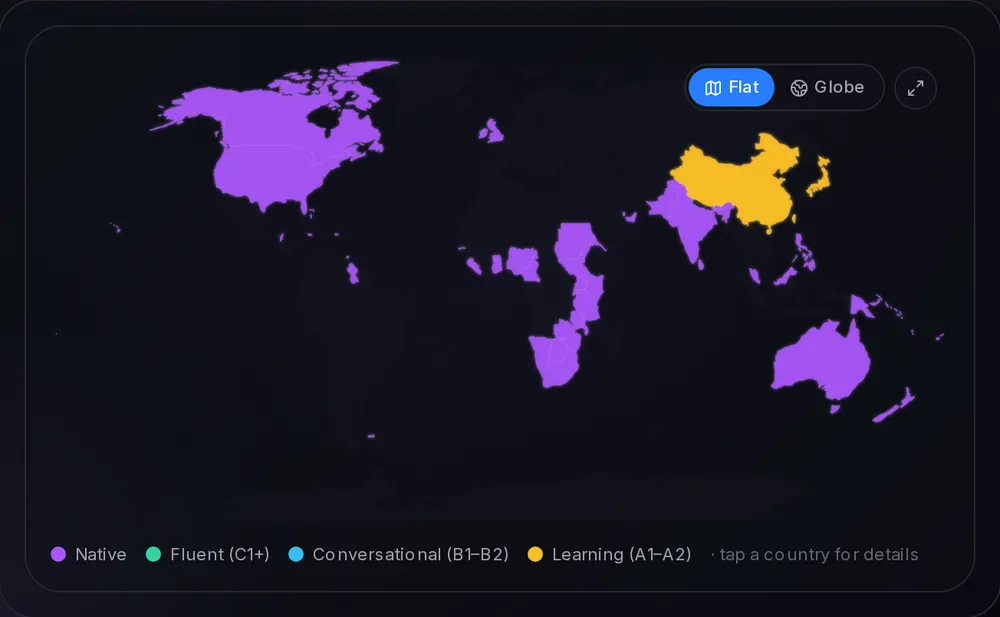
Add your languages with a level and the map colours in the countries where they're spoken. It also works out roughly what share of the world you could hold a conversation with. Nobody needs this. It's nice to look at during a slow week.
Free covers one language, keeps all your history and doesn't run out. Pro is for people learning more than one.
$0
US$2.99 a month
or US$29.99 a year (about US$2.50 a month) Save 16%
Prices are in US dollars. Pro is bought inside the app.
Something else? Write to us.
Yes. The free plan covers one language, with logging, the timer, a daily goal, streaks, stats, the map and all your history. Pro costs US$2.99 a month or US$29.99 a year (about US$2.50 a month) and adds unlimited languages, the media library and streak repair.
No. LangTrack is a web app at app.langtrack.app. It works in the browser on phones, tablets and computers.
About 340, including Welsh, Cantonese, Latin and Esperanto. The app's own interface is available in 26 languages.
Log it later. Every entry has a date, so you can add yesterday's reading today.
It goes back to zero. Pro has streak repair for the odd missed day. The weekly recap is the kinder number anyway: 5 days out of 7 is a good week.
Very roughly 350 to 450 hours for Spanish or French if you're starting from English, and a lot more for Japanese or Mandarin.
Most of what's on the blog is about hours, and how to count them.
Pick a language and put in the minutes. It takes less time than reading this page did.
Start tracking — it's free